Ready-to-use fluids
Compare the required grade and application specification for engine, gear, hydraulic or transmission service.


Compare finished lubricants and additive packages by application, viscosity and performance requirements.
Discuss your requirementsTemperature, load and equipment requirements guide fluid selection. For a blending project, document base-stock compatibility and the validation expected for the finished formulation.
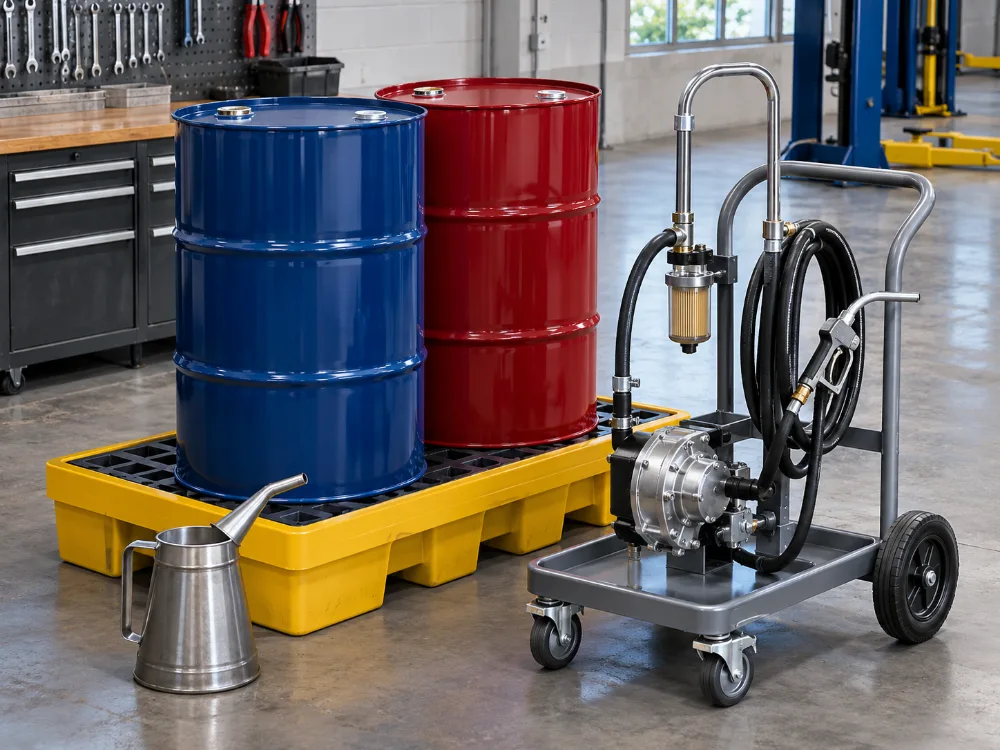
Plan dedicated or verified-clean transfer equipment, sealed containers and legible batch identifiers. Follow the product's storage instructions and confirm shelf life before stocking.
Capture the viscosity grade, application specification and required supporting documents. For a concentrate, define the intended base oil and proposed treat rate for supplier review.
Identify whether the inquiry concerns a finished engine or hydraulic oil, a transmission fluid, or an additive package intended for controlled blending.
Compare the required grade and application specification for engine, gear, hydraulic or transmission service.
Specify intended function, blend compatibility and validation requirements. An additive package is a blending input.
Clarify these points when comparing offers.
Check the intended service, performance specification and any equipment-maker requirements alongside viscosity before approving a substitute.
Specify drums, intermediate bulk containers or another agreed format, confirm the lot certificate and technical data sheet, and check unloading and spill-control arrangements.
Send a business inquiry