Milk solids
Compare skim and whole milk powders by fat, protein, heat treatment and the way they reconstitute.


Compare dairy ingredients by composition, processing behaviour and storage requirements.
Discuss your requirements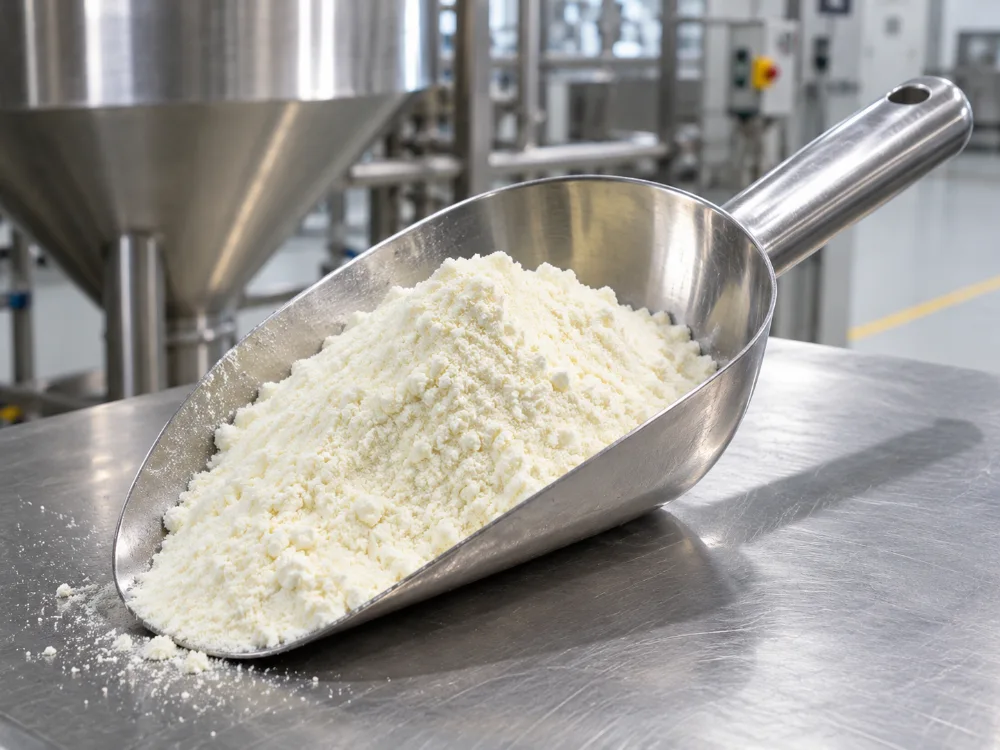
Dry dairy powders require protection from moisture. Chilled or frozen products require an agreed temperature range and a plan to record it through transfer and receipt.
Milk powders contribute milk solids, whey ingredients vary in protein and lactose content, and butterfat ingredients support formulations that call for concentrated dairy fat.
Compare skim and whole milk powders by fat, protein, heat treatment and the way they reconstitute.
For whey ingredients, specify the protein or lactose profile. For fat ingredients, confirm composition and storage temperature.
A beverage producer may specify dispersibility, while a bakery may evaluate colour and flavour through baking. Run a trial using the intended process before committing to a specification.
Define fat, protein, moisture and microbiological criteria for the ingredient. Specify the analysis basis and any processing characteristics needed for your formulation.
Clarify these points when comparing offers.
Ask for the product specification, lot analysis, traceability and allergen declarations. Confirm destination-specific documents with the importer before ordering.
Agree on liner and pack type, lot marking and minimum remaining shelf life at receipt. Establish how temperature deviations or damaged seals will be evaluated.
Send a business inquiry